India does not behave like a single market. A pin code 1-2 kilometres from another can have a completely different income mix, a different appetite for premium products, and a different ratio of cash to digital spend. Global GTM tools, built for markets with cleaner, more homogenous data, were never designed to handle this kind of variance.
They assume a level of digital footprint and payment traceability that large parts of India simply don’t have. Cash-heavy consumption, offline-first buying behaviour, and hyperlocal shifts in lifestyle mean that averages calculated at a city or state level tell brands almost nothing useful about where to open a store or whom to digitally target next.
This is the gap Kentrix was built to close.
A Comprehensive GTM Engine, Built for Indian Complexity
Most GTM tools sell a dashboard. Kentrix provides a granular data backbone. At the core of the platform sits a building-level dataset covering over 920 million Indians, built by stitching together more than 80 partnerships across government sources, regulated enterprises, and transaction-led platforms. The data is anonymised at the source, with no names, no phone numbers, no personally identifiable information, and is structured to stay compliant with India’s DPDP framework from the ground up.
Indian consumer data is fragmented by default, spread across formats, geographies, and sources that rarely talk to each other. Kentrix’s real engineering effort goes into cleaning, matching, and stitching this data at a building and micro-market level, then layering it with what the company calls Lifestyle Segmentation Intelligence, consumer segments built not from assumed income brackets or age bands, but from actual spending across categories like finance, real estate, automobile, food and grocery, entertainment and many others.
That distinction matters. Two households in the same income bracket in the same pin code can behave in entirely different ways when it comes to what they buy and how they buy it. A GTM engine that only looks at income and geography misses this. One that looks at lifestyle signals doesn’t.
This is why Kentrix positions itself as infrastructure rather than a point solution. Brands don’t plug in a single tool and walk away with an answer; they plug into a continuous intelligence layer that connects location planning, audience targeting, and customer growth, all built on the same underlying view of the Indian consumer.
3 Solutions That Power Our GTM
Kentrix’s suite is designed to meet brands wherever they are in their growth journey, with each product built on the same LSI backbone.
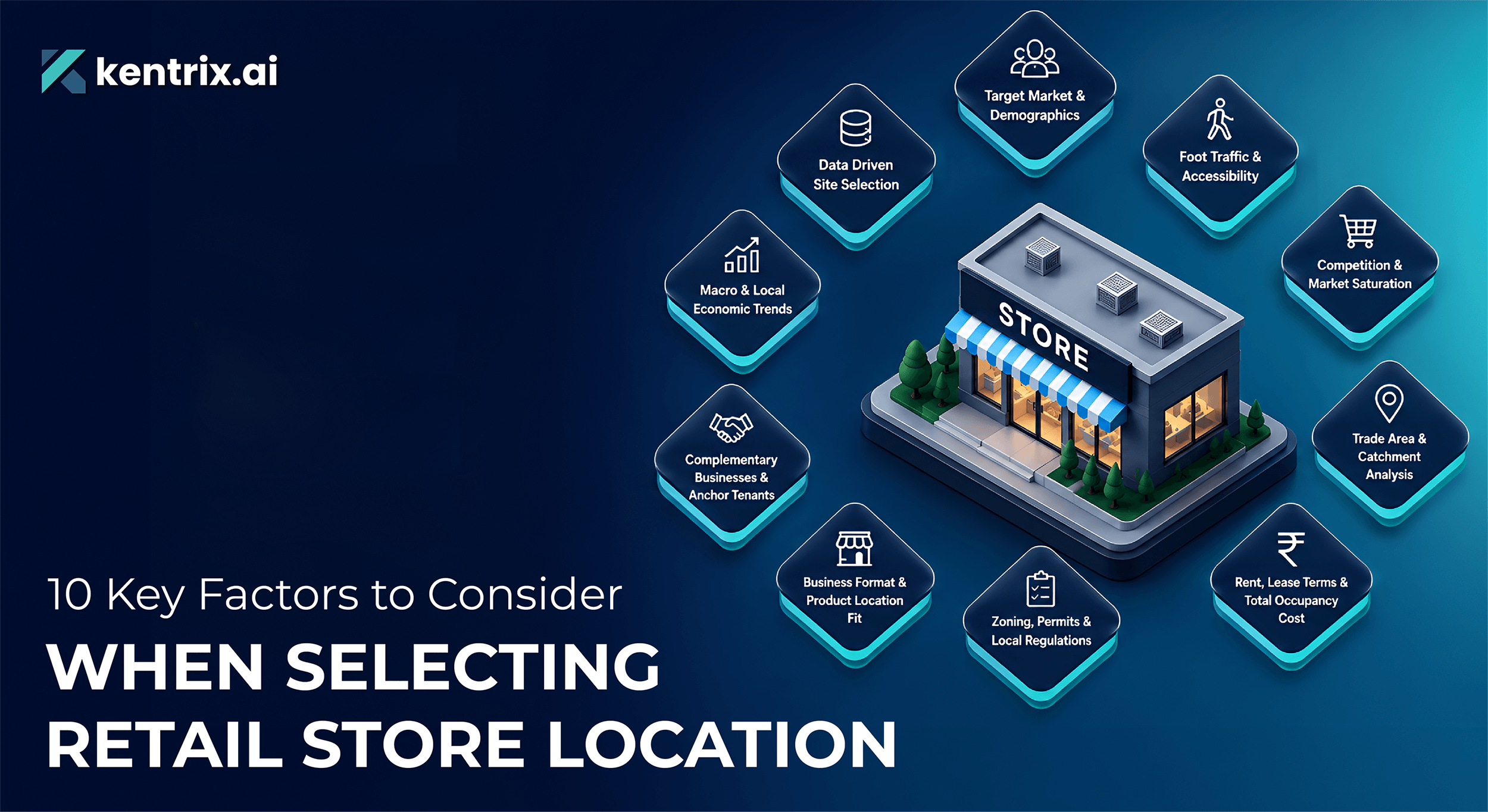
Geomarketeer is the location intelligence platform. It helps brands decide where to open their next outlet, project revenue before a store even exists, and understand catchment-level demand down to the pin code. For brands expanding physical or omnichannel footprints, where capital allocation and ROI visibility are non-negotiable, this is typically the starting point.
Persona 360 solves for audience targeting using MAID-based, privacy-safe building level intelligence rather than cookie-dependent tracking, which is increasingly unreliable as third-party cookies phase out and as much of India’s mobile-first, app-heavy audience never generates a clean cookie trail in the first place. Brands spending heavily on acquisition but struggling with rising CAC or poor targeting efficiency lean on this to find and reach high-intent audiences with far less wastage.
Karma is the customer enrichment layer, built to boost customer lifetime value once a brand already has an acquired base. It surfaces upsell and cross-sell opportunities by enriching existing customer records with the same lifestyle intelligence, helping brands understand who among their existing customers is likely to buy more, buy differently, or churn.
Individually, each product competes with a category-specific player. Together, they do something none of those players can: give a brand one continuous view of the market across expansion, acquisition, and retention, instead of three disconnected reports that never talk to each other.
What Actually Sets Kentrix Apart
The first differentiator is not the existence of data. Plenty of companies sell consumer data in India. It’s the granularity, accuracy, and unification of it. Most providers stop at insight, a report, a dashboard, a static number, describing what already happened. Kentrix’s models sit on top of the data layer to project what happens next.
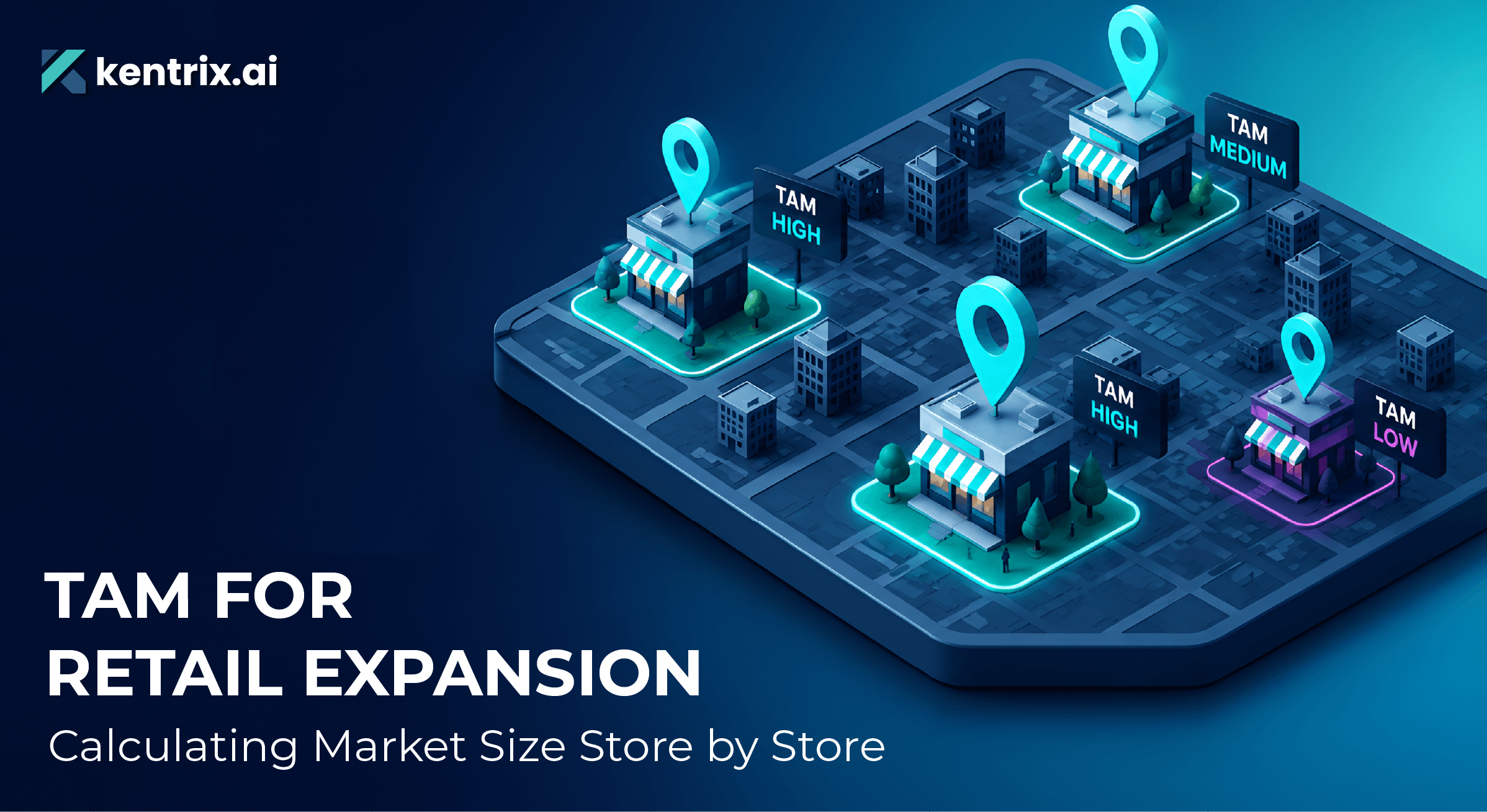
This is where the platform’s predictive AI capabilities come in, and they go well beyond a single use case. StorePerformix predicts a store’s revenue potential and footfall before capital is committed, giving brands a projected outcome for a location rather than a historical benchmark. StoreSKUmix predicts which products are likely to see high demand at a specific store, based on the lifestyle and spending profile of the catchment around it, so that inventory decisions are made for the micro-market a store actually serves rather than a generic regional plan. StorePlannix extends this further into network-level planning, helping brands sequence and prioritise expansion across multiple potential locations based on projected sales performance.
Together, these three predictive layers mean a brand doesn’t just know where people are or what they’ve bought before; it gets a forward-looking read on revenue, demand, and product mix before a single rupee is spent. This has made the predictive suite relevant well beyond retail. FMCG companies use it to plan distribution and SKU allocation down to the outlet. Pharma brands use it to project demand for specific therapies in specific catchments. Banks and NBFCs use it to identify where credit demand and repayment behaviour are likely to be strongest before opening a branch. Quick commerce players use it to decide dark store placement and stock composition down to the pin code.
Powering Real Decisions Today
Brands across BFSI, QSR, retail, and consumer durables use Kentrix today to decide which markets to enter, which audiences to prioritise, and which stores need intervention. The value isn’t in the volume of data. It’s in what a brand can actually do with it: open the right store in the right catchment, spend acquisition budgets on the audiences most likely to convert, and catch underperformance before it becomes a write-off.
As India’s consumption story keeps fragmenting into hundreds of micro-markets rather than a handful of metros, the brands that win won’t be the ones with the most data. They’ll be the ones with the most usable data, structured in a way that turns into a decision, not just a chart.
That’s the infrastructure Kentrix has quietly built, and the one leading brands are now building their GTM strategy on top of.