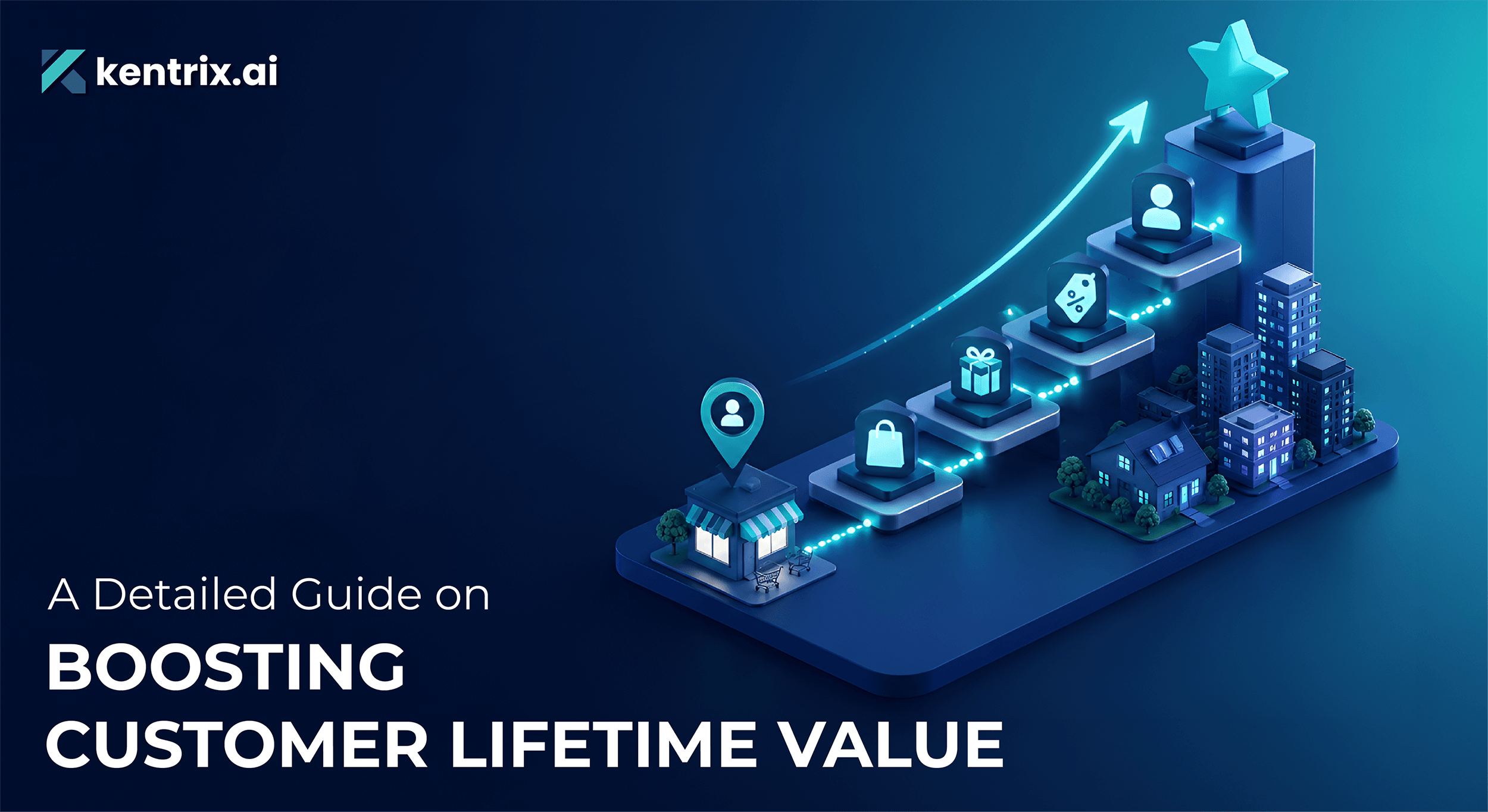
What Is Customer Lifetime Value?
Customer lifetime value (CLV) is the total revenue or profit that a business can expect from a customer over the entire span of their relationship, not just their first purchase. A customer who spends ₹2,000 once is worth far less than one who spends ₹2,000 every quarter for five years, even though their first transaction looks identical.
Quick answer: CLV is a function of three levers – average order value, purchase frequency, and customer lifespan. Boosting CLV means moving one or more of these levers, and the highest-leverage way to do that is understanding each customer well enough to offer them the right thing at the right time.
Why CLV Matters More Than New Customer Acquisition
Acquiring a new customer typically costs five to twenty-five times more than retaining an existing one. Most businesses still spend the overwhelming majority of their marketing budget on acquisition, even though a small improvement in retention compounds into a disproportionately larger increase in profit. This is the core economic argument for treating CLV, not just acquisition volume but as the primary growth lever.
Core Strategies to Boost Customer Lifetime Value
-
Unify customer data into a single view
Every CLV strategy starts here. If customer data is scattered across CRM, POS, and app platforms, no team can see the full picture of who a customer actually is or what they’re worth. A single, complete customer profile is the foundation every other strategy below depends on.
-
Increase average order value through relevant upselling
Upselling and cross-selling only work when the recommendation is genuinely relevant. Generic “customers also bought” suggestions convert poorly; recommendations based on a customer’s actual spend pattern and lifestyle segment convert significantly better, because they match intent rather than guessing at it.
-
Increase purchase frequency with targeted, not blanket, campaigns
Sending the same offer to an entire customer base wastes the budget on customers who were never going to convert and under-serves the ones who would have converted on a better offer. Segmenting customers by propensity, how likely each one is to respond to a specific offer lets a business reach the same revenue outcome at a fraction of the spend, or grow revenue at the same spend.
-
Reduce churn with early behavioral signals
Churn is far cheaper to prevent than to reverse. Declining purchase frequency, reduced engagement, or a shift in category spend are all early signals that a customer’s relationship with a brand is weakening and they typically show up weeks before a customer fully disengages. Catching these signals early allows for a retention nudge before the customer is gone, rather than a costly win-back campaign after.
-
Personalize the experience, not just the offer
Personalization goes beyond product recommendations. Channel choice, message timing, and even tone should reflect what’s known about a customer’s lifestyle and behavior. A premium, time-poor customer responds to a different message than a value-conscious, frequent browser even if both are being offered the same product.
-
Win back dormant customers with the right nudge
A dormant customer isn’t necessarily a lost one. Reactivating them works best when the win-back offer reflects what they previously valued, the category they used to spend on, not a generic discount because a targeted nudge based on past affinity performs far better than a blanket “we miss you” email.
-
Extend customer lifespan by fixing why customers actually leave
Understanding why customers stop buying – price sensitivity, a bad experience, a life-stage shift, a better competitor offer allows a business to address the actual cause rather than applying the same retention tactic to every departing customer.
How Karma By Kentrix Helps Boost Customer Lifetime Value?
Every strategy above depends on the same underlying requirement: knowing your customers well enough to act on them individually rather than as a single undifferentiated base. This is the specific problem Karma, Kentrix’s CLV engine, is built to solve.
Karma enriches every customer record with a verified household income band, lifestyle and psychographic segmentation, and spend signals across 80+ categories, using only an address, mobile advertising ID, or GPS point as the match-key, with no PII required. On top of this enriched profile, an AI recommendation engine produces a ranked Next Best Action for every customer: the specific product, offer, and channel they’re most likely to respond to next, refreshed monthly as behavior changes.
In practice, this directly maps to the strategies above:
- Upsell/cross-sell – Karma flags category-level spend patterns to surface what a customer is ready to buy next, before they’ve shown intent anywhere else
- Churn prevention – the platform tracks spending frequency and engagement drops to flag early churn risk
- Win-back – dormant customers get re-engaged with offers matched to what they previously spent on, not generic discounts
- Risk profiling – for BFSI clients, the same enrichment supports creditworthiness and repayment-likelihood assessment
This approach has already driven measurable CLV outcomes at scale – YES Bank used Karma’s real-time customer enrichment for propensity-based Fixed Deposit targeting and saw 2X FD revenue with a 50% reduction in revenue-cycle time, by sending campaigns only to high-affinity customers instead of the full base.
The Takeaway
Boosting customer lifetime value isn’t one initiative. It’s the compounding effect of knowing customers well enough to act on each of them individually: the right upsell, the right retention nudge, the right win-back offer, sent to the right person at the right time. The businesses seeing the biggest CLV gains in 2026 are the ones replacing blanket campaigns with enriched, individually-scored customer data.