A retail store’s location is not one input among many. It is the single decision that sets a ceiling on everything else. The best merchandising, staffing, and marketing plan cannot fix a site that sits outside its customers’ natural movement patterns. Before signing a lease, retailers need a structured way to evaluate a location against the factors that actually predict footfall, revenue, and long-term viability.
This guide breaks down the ten factors that matter most when selecting a retail store location, with a specific look at how these factors are playing out in India’s rapidly shifting retail map, where Tier-2 and Tier-3 cities are now absorbing more retail investment than legacy metro markets.
-
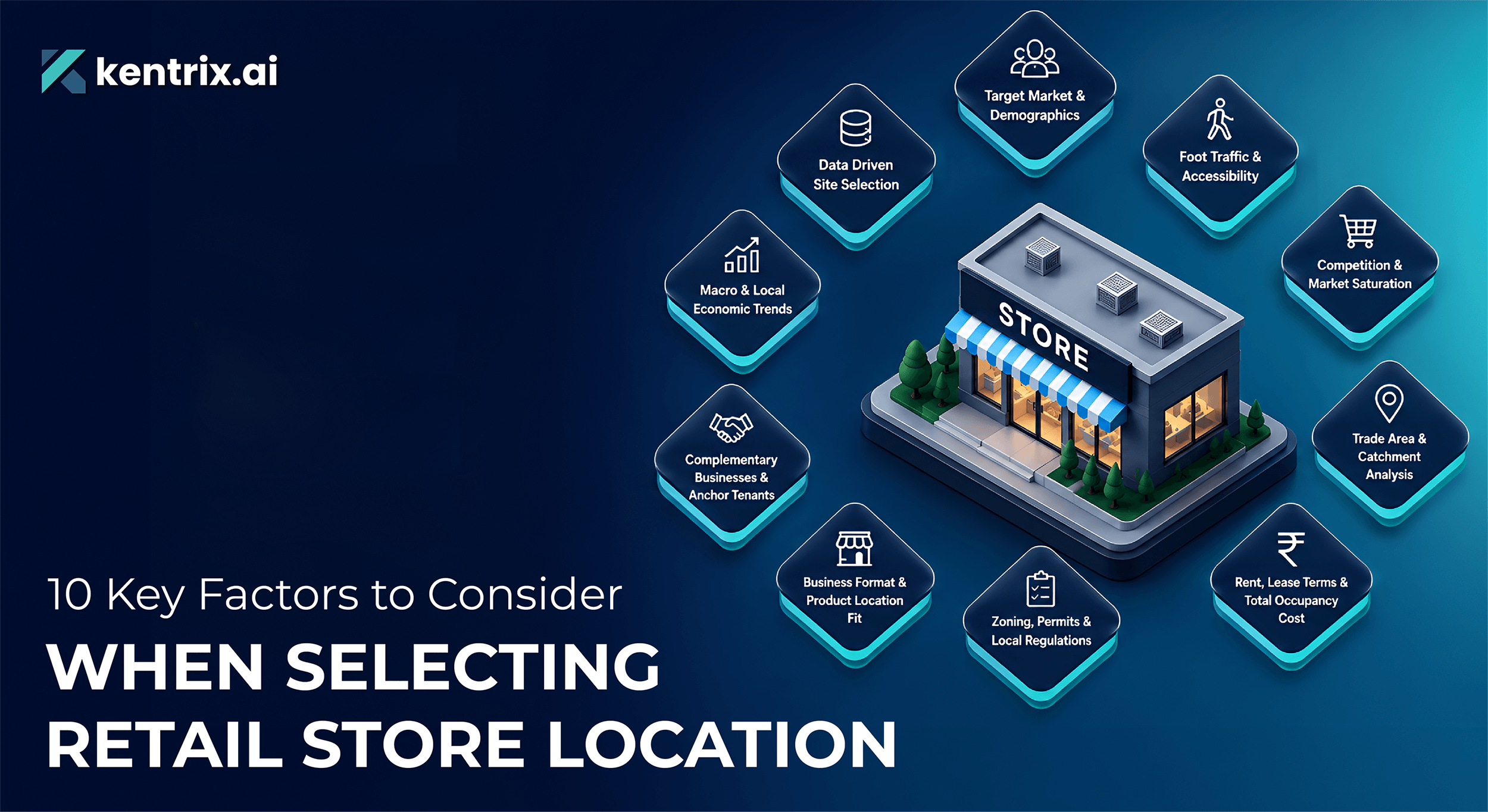
Target Market & Customer Demographics
The starting point for any site selection process is a clear picture of who the store needs to serve. Population density, age distribution, household income, and lifestyle segment within a location’s catchment area determine whether the store will find its customer base at all.
A location can have heavy foot traffic and still be the wrong fit if the people walking past are not the target customer. This is why demographic profiling is treated as the foundation of retail site selection, ahead of nearly every other factor.
What to check: population density and growth trend, income distribution, building-level composition, and lifestyle or spending-segment data for the specific catchment, not the city as a whole.
-
Foot Traffic & Accessibility
Raw footfall matters, but the type of footfall matters more. A location near a transit hub, office cluster, or educational institution generates a different customer profile than one near a residential-only pocket.
What to check:
- Pedestrian and vehicle traffic counts at different times of day and week
- Visibility from the main road and ease of entry/exit
- Parking availability for auto-dependent markets; walkability and transit access for urban cores
- Proximity to anchor points of interest (POIs) such as malls, universities, offices, and transit stations, which reliably pull footfall toward nearby stores.
-
Competition & Market Saturation
Competitor presence cuts both ways. Being near complementary businesses can generate mutual traffic, while being too close to a direct competitor, especially a location within the same brand’s own network risks cannibalization, where two stores split demand instead of growing it.
Retailers expanding into a new micro-market should map existing competitor density and trade-area overlap before committing to a site, rather than after. This is one of the areas where location intelligence platforms add the most value, since manually tracking competitor footprints across dozens of candidate sites is impractical.
-
Trade Area & Catchment Analysis
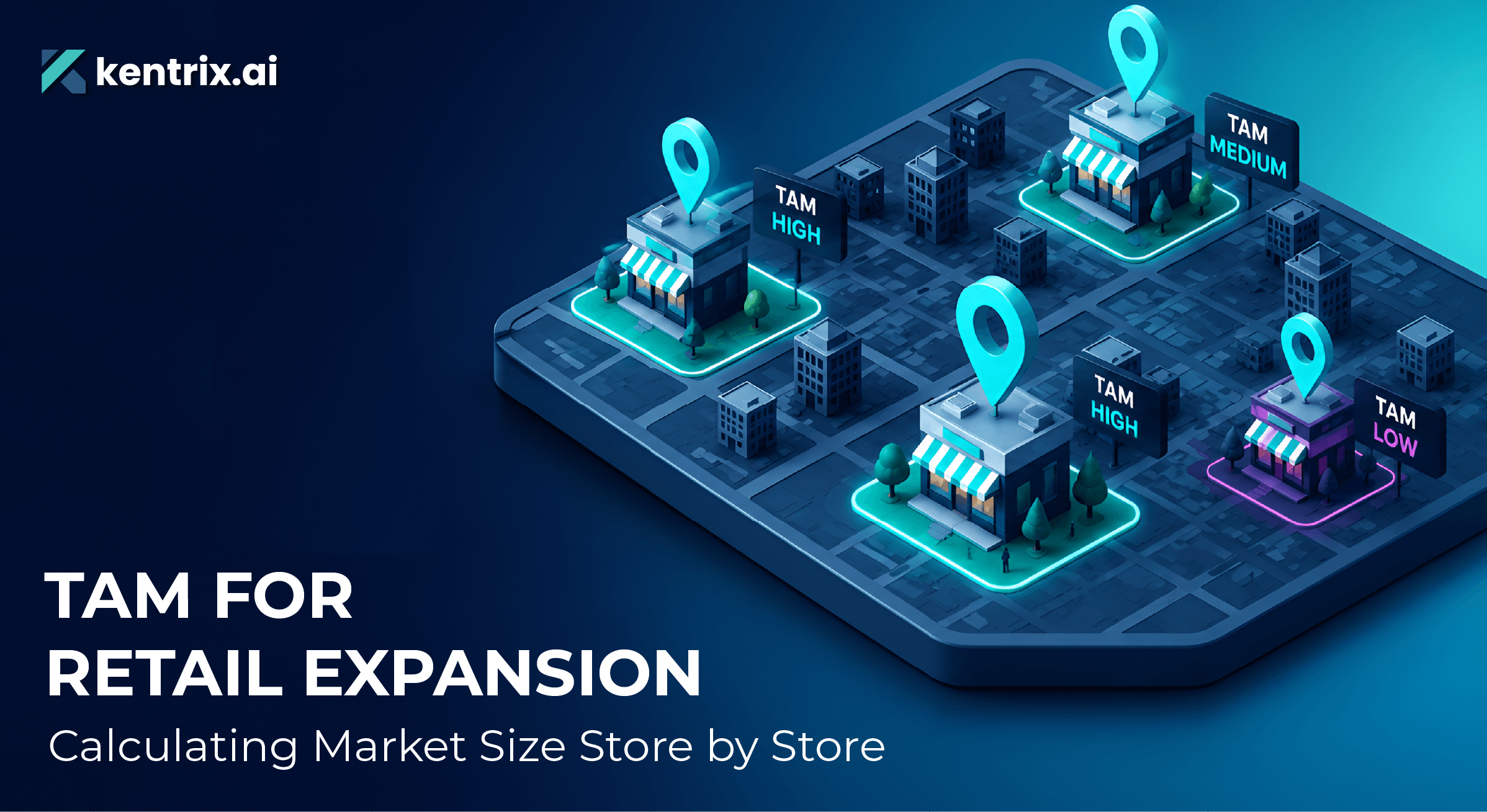
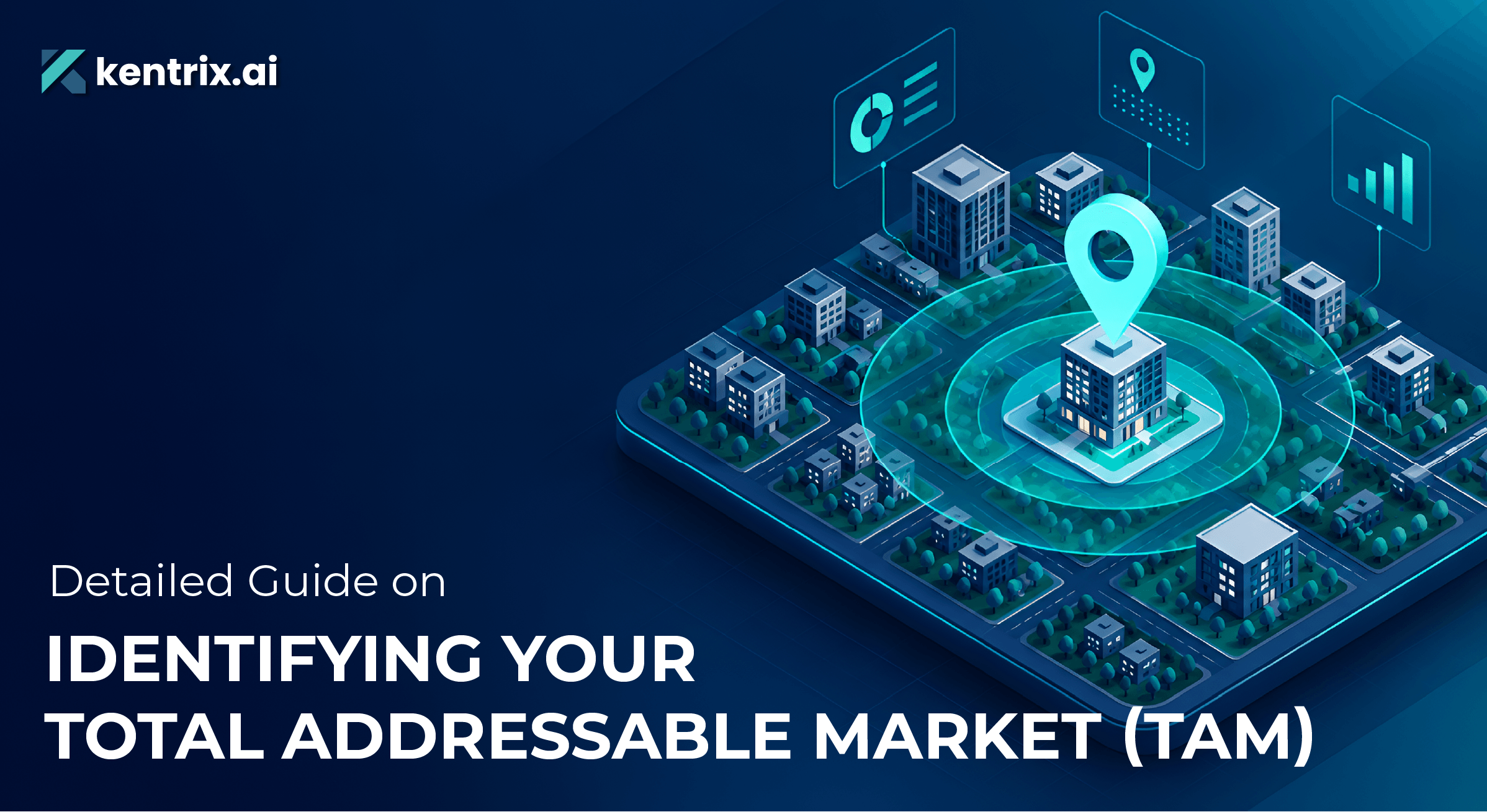
A trade area is the geographic zone from which a store realistically draws its customers, typically mapped by drive-time or walk-time rather than a simple radius, since real accessibility rarely forms a perfect circle. Understanding the trade area lets a retailer estimate the total addressable market (TAM) for a candidate site before opening a single day of business.
Overlapping trade areas between a retailer’s own existing stores is a direct cannibalization signal and should be checked as part of every new-site evaluation, not just when expansion complaints start coming in.
-
Rent, Lease Terms & Total Occupancy Cost
Prime visibility comes at a price, and the highest-traffic site is not automatically the most profitable one. Retailers need to weigh rent and lease terms against projected revenue, not against visibility alone.
What to check: base rent versus revenue-share terms, common area maintenance (CAM) charges, lease escalation clauses, security deposit requirements, and fit-out costs. Emerging micro-markets often offer a materially better cost-to-footfall ratio than saturated prime locations.
-
Zoning, Permits & Local Regulations
Local zoning laws, signage restrictions, operating-hour rules, and category-specific compliance requirements can quietly disqualify an otherwise strong site. These regulations vary by city and even by ward, so they need to be verified early in the site-shortlisting process, not after a lease is signed.
-
Business Format & Product Location Fit
The right location depends heavily on what is being sold. A high-ticket, considered-purchase format (furniture, electronics) needs a larger footprint and can tolerate a slightly lower-traffic, lower-rent location. An impulse-purchase or convenience format needs maximum visibility and footfall, even in a smaller space. A service-led format (salons, clinics, QSR) prioritizes parking and ease of access over pure visibility.
Matching store format to location type, rather than applying one location checklist across every store type is what separates a data-driven expansion strategy from a generic one.
-
Complementary Businesses & Anchor Tenants
Stores located near strong anchor tenants (large supermarkets, cinemas, hospitals) or clusters of complementary businesses benefit from shared footfall without direct competition. Evaluating what else is drawing people to a micro-market is as important as evaluating the site itself.
-
Macro & Local Economic Trends
Beyond the immediate site, broader economic signals shape long-term location performance: local employment trends, infrastructure investment (metro lines, highways, airports), inflation and consumer spending patterns, and regional GDP growth. A location that looks average today but sits on a planned infrastructure corridor can outperform a currently-strong location within a few years.
-
Data Driven Site selection vs Instinct
Retail site selection has historically leaned on spreadsheets, census data, and on-the-ground judgment more art than science. That is changing. AI-powered location intelligence platforms now let retailers evaluate demographics, spending patterns, competitor density, and cannibalization risk for any candidate site in minutes rather than weeks, replacing guesswork with building-level data.
Quick answer: the single highest-leverage shift in modern retail site selection is moving from city-level averages to micro-market, building-level data because two sites in the same city can have completely different customer profiles just streets apart.
Why India’s Retail Location Map Is Changing
India’s retail expansion story in 2026 looks different from a decade ago. Tier-2 cities now hold 61% Grade-A retail stock compared to 45% in Tier-1 metros, and cities like Chandigarh, Mangaluru, and Lucknow are outpacing older metro markets on international brand penetration and consumption power. Much of India’s e-commerce and retail growth is now coming from Tier-2 and Tier-3 (“Bharat”) markets rather than the traditional metro-first playbook.
This shift raises the stakes on location selection. A city that looks attractive on population size alone may not have the income distribution, lifestyle segment mix, or infrastructure maturity to support a given retail format while a smaller city with strong Grade-A retail growth and rising disposable income might outperform expectations. Evaluating candidate cities and micro-markets on actual household-level spending and lifestyle data, rather than population size or brand instinct, has become essential for retailers expanding beyond metros.
This is precisely the gap Kentrix’s Geomarketeer was built to close. Instead of relying on PIN-code averages or outdated census projections, Geomarketeer maps building-level consumer data across 920 million Indians, covering 12 proprietary lifestyle segments, real spending patterns across nine categories, and dynamic drive-time catchments rather than simple radius circles. Retailers can drop a pin on any location in India, metro or Tier-3 and instantly see whitespace opportunity, competitive density, and cannibalization risk before committing to a lease.
Conclusion
Retail store location decisions come down to matching a specific business format to a specific micro-market’s demographics, footfall pattern, competitive landscape, and cost structure, not to a single “best” city or street. The retailers getting this right in 2026 are the ones replacing spreadsheet-and-instinct site selection with building-level location data, especially as growth shifts toward India’s Tier-2 and Tier-3 markets.